

The Potential of Upcycling Food Industry By-Products
NoPalm Ingredients is known for its biomass fermentation expertise, and more specifically how we create a circular ingredient by upcycling food-industry by-products. We see potential where others might see low value, or even waste. Using under-utilized side streams as feedstock for fermentation is the core of our production process. To make this possible, we collaborate with suppliers who share our vision: a circular economy that prioritizes the value of existing resources over the cultivation of new crops.
So, what makes upcycling by-products relevant for you? Let’s dive in.
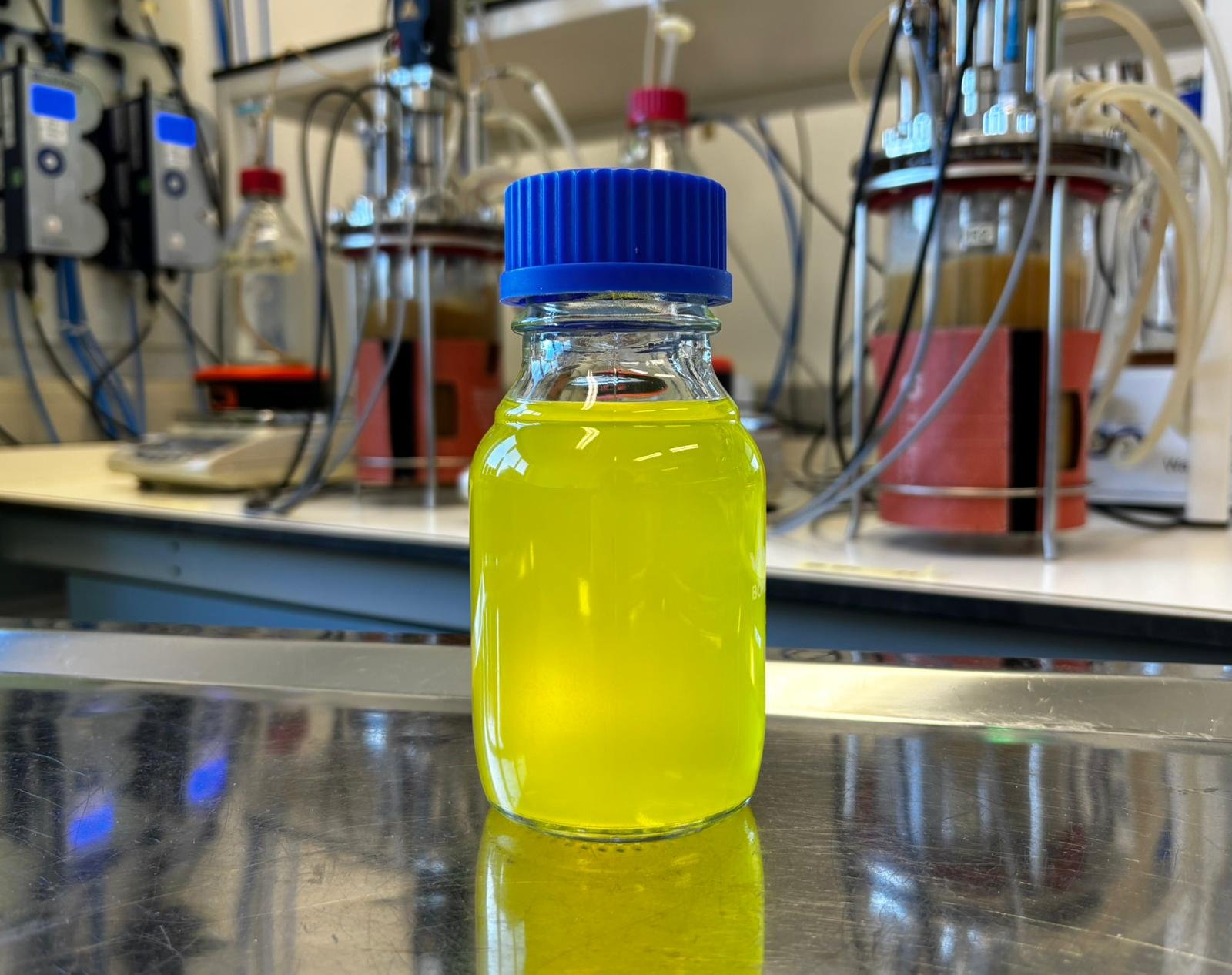
Whey permeate, a by-product of cheese and protein production
Tackling Food Loss
By‑products can be seen as the “leftovers” from food production and are counted as food losses because they typically aren’t used for their highest-value purpose. A huge amount disappears, gets thrown away, or ends up as compost or animal feed. In total, about one‑third of all food produced worldwide is wasted every year, which is around 1.3 billion tons of edible food. But interest in the value and potential of these by‑products has grown significantly in recent years.
Experts strongly recommend finding better ways to use by‑products from food processing. Doing this helps us get more value from the sources we already have and supports a more secure and circular food system.
Decoupling Lipids from Land
Availability is a growing concern for many land‑based lipids. Most lipids used today depend on agricultural land. Cocoa butter, for example, faces global shortages and structural supply issues, causing price spikes. Shea butter offers strong functionality but has encountered challenges in performance. Coconut oil is application‑specific, faces low‑yield due to aging trees, and is increasingly difficult to source due to a production growth far below the demand growth. Palm seems to remain the most efficient option, yet global demand is rising at around 4% per year, while sustainable certified supply struggles to keep up.
Using industry by‑products as feedstock for fermentation-derived lipid alternatives provides a complementary solution to land-based sources, one that complements palm, without relying on agricultural land. A wide range of feedstocks containing carbohydrates, alcohols, or organic acids could be promising for our fermentation process.
“In most cases, we offer a higher valorization of such by-products, not only sustainably, but also operationally and economically. With our co-location concept, the material remains in the food cycle while companies do not have to spend any effort selling the material across traditional waste management solutions, often against negative or at least very instable prices. We offer a stable, local, de-risked partnership”
Peter Roosink, Business Development Manager. Read a full interview with Peter here.
Scaling Smarter, Not Bigger
We envision a co‑location industrial model where our fermentation units are placed directly with feedstock suppliers. This reduces logistics, lowers emissions, and keeps the model asset‑light by leveraging existing infrastructure and utilities.
This approach limits both CAPEX and OPEX and enables rapid replication. We have already demonstrated the technology at a 120 m³ fermentation scale and are now progressing toward a demo factory and our first commercial facility targeting up to 9,000 tons of oil per year.
To show how this works in practice, our partnership with Milcobel provides a strong example of a true win‑win. Milcobel can valorize its whey permeate, a by-product of cheese and protein production, while we secure a stable feedstock stream for our demonstration factory. Co‑locating our fermentation units enables direct conversion of whey permeate into high value lipids on-site.
Innovating Together
We are continuously testing and optimizing a diverse range of feedstocks to expand our production flexibility and broaden our product platform.
For suppliers exploring alternative options to valorize their underutilized by‑products, we would be glad to explore possibilities. We welcome conversations with partners who want to advance circularity in the food industry. For any related questions, feel free to get in touch.
Sources
Aït-Kaddour, A., Hassoun, A., Tarchi, I., Loudiyi, M., Boukria, O., Cahyana, Y., Ozogul, F., & Khwaldia, K. (2024). Transforming plant-based waste and by-products into valuable products using various “Food Industry 4.0” enabling technologies: A literature review. The Science Of The Total Environment, 955, 176872. https://doi.org/10.1016/j.scitotenv.2024.176872
Darko, H. S. O., Ismaiel, L., Fanesi, B., Pacetti, D., & Lucci, P. (2024). Current Trends in Food Processing By-Products as Sources of High Value-Added Compounds in Food Fortification. Foods, 13(17), 2658. https://doi.org/10.3390/foods13172658