
Interview with Peter Roosink: How Do We Maximize the Value of By‑Products?
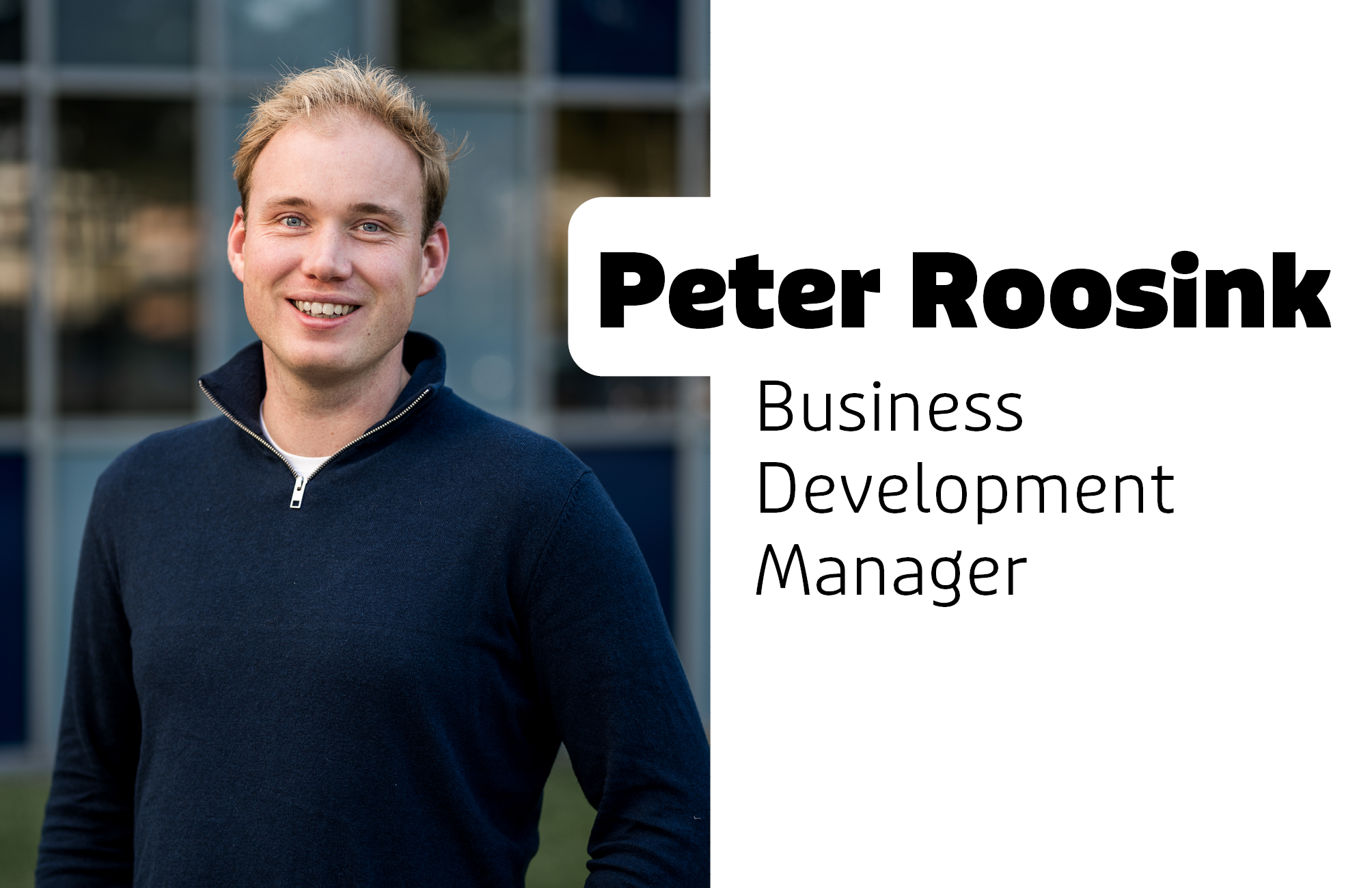
Meet Peter Roosink, NoPalm Ingredients’ Business Development Manager, someone who has spent his career exploring one central question: How do we maximize the value of crops? With a background that combines food science, commercial strategy, and circular innovation, Peter brings expertise in transforming by‑products into high‑value, sustainable solutions.
How does your professional background contribute to the mission of NoPalm Ingredients?
“I’m a food scientist with a strong commercial drive, and from the start I’ve focused on turning food industry by‑products into sustainable business models. In every step of my career, I’ve been driven by the same purpose: creating more value with fewer resources.”
“My career started at Cosun, where we worked on innovation programs on the total use of crops, transforming former by-products into high‑value ingredients. Later, as an Innovation Lead at Peelpioneers, I explored the potential of orange peels in a biorefinery model. This is where I first crossed paths with the, at the time, just-founded NoPalm Ingredients. Their shared mission, to maximize the value of food industry by-products, immediately clicked.”
“Now at NoPalm Ingredients, we screen a wide variety of potential feedstocks. For each feedstock, the team and I evaluate both its economic and technical feasibility. Being part of a dynamic team where new paths and ways of working are continuously being shaped makes this role the perfect fit for me.”
What challenges do you see in securing sustainable feedstock and building strong industry partnerships?
“To run a factory, we need consistently high feedstock volumes. That can be a challenge, because many by‑products occur in smaller or seasonal volumes. It can be quite a puzzle to deliver a year-round stable input. Other, more bulky feedstocks from established industries already have a ‘sufficient’ destination for now, such as feed or biogas. However, we must look 10+ years ahead. The potential of by‑products used for feed or biogas will decline as livestock numbers drop, and biogas is often not profitable. Where valorization into microbial oils through our technology delivers more stable and sustainable value.”
“Securing sustainable feedstock is all about scale and long‑term vision.”
“The challenge is to create confidence in our concept throughout the value chain, while we are still in the process of scaling up. Being open with partners on the potential, timelines, and risks is key in this process. Luckily, we’re making solid steps in providing proof points on an industrial scale. As a start‑up in a scaling phase, we have to be transparent. In our experience, partners understand our current phase of development and appreciate this.”
“Many suppliers already approach us proactively because they recognize two things:
their by‑products hold more value than they’re capturing today, and
the feed market for the next decade won’t look like the one they rely on now.”
“So yes, securing long‑term feedstock takes work, but the interest is already there. Partners see the shift coming, and they want to be part of a future‑proof solution.”
What makes NoPalm Ingredients’ valorization strategy different?
“In many processes that we compete with, like producing specialty materials or specialty ingredients, only a small fraction of the raw material ends up being a high value product, while the remains still end up in waste management. We work differently. Almost all input materials get converted into valuable products: both microbial oil for food and cosmetics, and spent biomass (the remains of our yeast after processing) for feed and petfood.”
“With our technology, almost all of the input material becomes an interesting product higher up the chain.”
What exciting steps lie ahead for NoPalm Ingredients?
“Our partnership with Milcobel, who merged with Royal Friesland Campina on January 1st 2026, is a major milestone. Their whey permeate will feed our demonstration factory, and together we’re planning a co‑located factory on Milcobel's site in Langemark, Belgium in 2028. For me, it’s the perfect example of a sustainable business model that creates value for both sides. Milcobel represents exactly the kind of forward‑thinking partnership we want to build more of.”
My role is to create more of these win‑win business cases. I’m involved in business development, commercial agreements, and project management across the full trajectory, which makes my work diverse and exciting. The potential to valorize more by-products is huge, so I’m always keeping an eye out for overlooked feedstocks with great potential.