
Future-proofing the food system with palm oil, without palm trees.
Next week, NoPalm Ingredients will be in Båstad, Sweden, as one of four global finalists for the 2026 Food Planet Prize, the world's largest environmental award for food and agriculture systems. Out of more than a thousand nominated initiatives from five continents, we are in the final four.
We want to use this moment to explain the problem we are actually trying to solve. Because it is more structural, and more interesting, than the narrative most people have heard.
The case for palm oil nobody wants to make
Let us start with something that surprises most people: palm oil is genuinely remarkable.
For the food industry, it is simply the only alternative that functions at the scale the world actually requires. For the cosmetics industry, it was the solution when the sector needed to move away from petrochemicals. Its unique lipid composition gives formulators an unmatched toolbox, a broad spectrum of fatty acids that underpin everything from skin creams to shampoos, all from a single bio-based source.
The numbers make this concrete. Palm produces 78 million tonnes of oil per year from just 27 million hectares of cropland. To match that output using coconut oil, you would need over 286 million hectares, more than ten times the land. No other crop comes close to palm's yield efficiency. For manufacturers, this is not an ideological choice. It is a supply chain reality: there is no equivalent substitute that works at scale. Not yet.
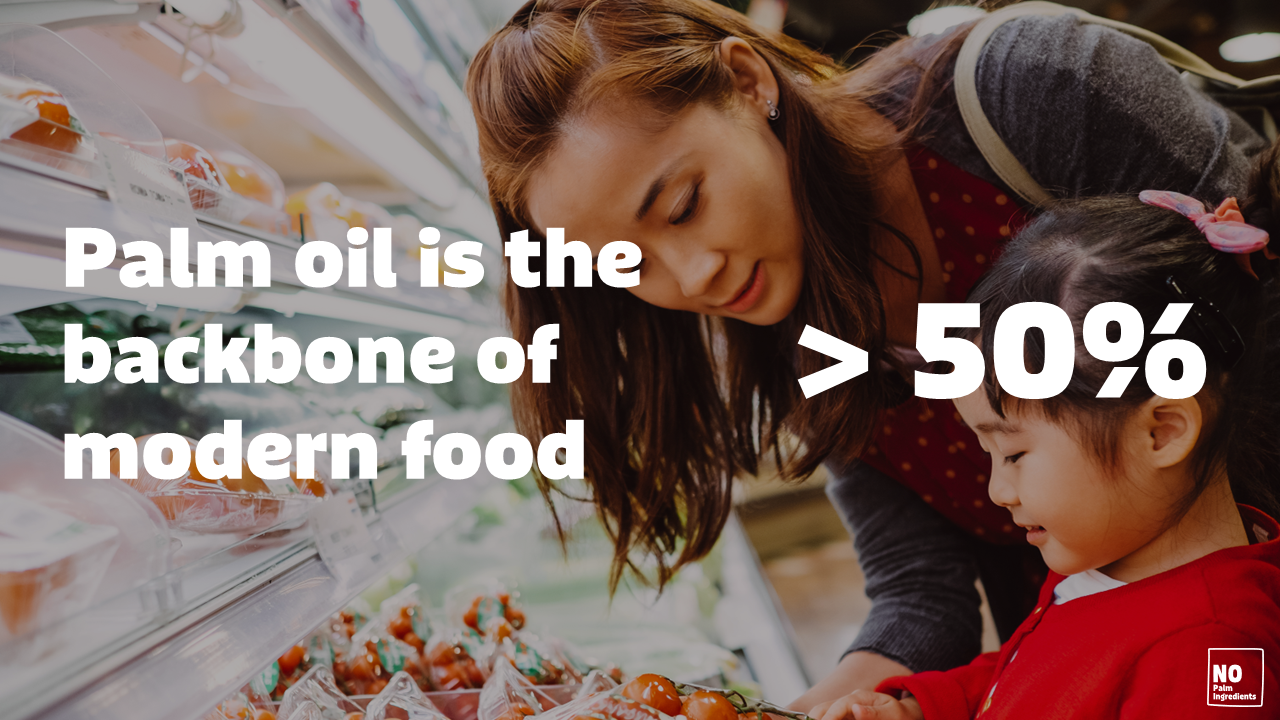
When an ingredient appears in more than 50% of supermarket products (food, personal care, pet food, infant formula…) it is there because it performs. Palm is cost-effective, stable, versatile, and available. The industry is well aware of the noise surrounding it. But aware does not mean free to act differently when the alternative does not exist.
The real structural problem
So palm is efficient. Efficient, however, does not mean infinite.
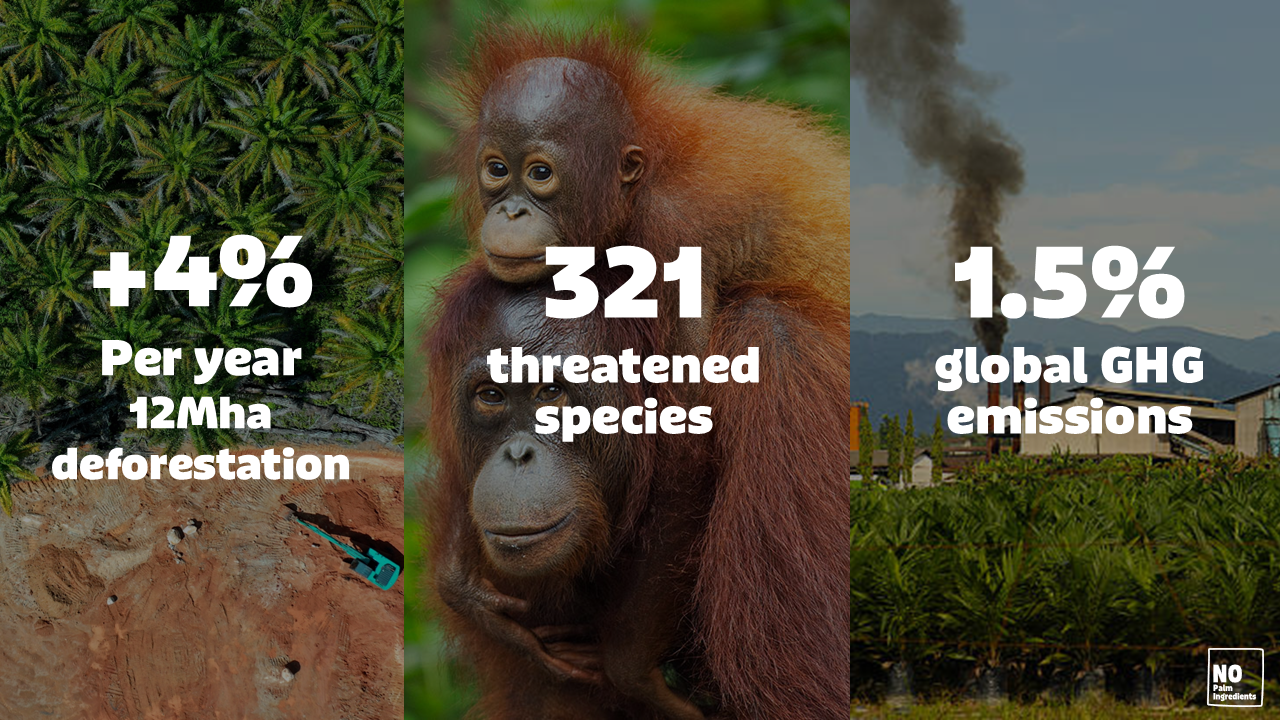
Global demand for palm oil is growing at approximately 4% per year. That growth is not slowing, it is being driven by population growth, rising incomes in developing markets, and expanding middle classes with access to packaged food and personal care products for the first time.
Meanwhile, the supply side faces a hard ceiling. Less than 20% of global palm volumes are sustainably certified and accessible across industries. Initiatives like the Roundtable on Sustainable Palm Oil (RSPO) are essential, and they represent genuine progress. But no certification framework can absorb a 4% annual demand increase indefinitely without expanding the area under cultivation.
The consequences of this structural gap are already visible and concrete. We see increasing pressure on certified volumes, rising price volatility, and intensifying competition between the food, cosmetics, and biofuel sectors, all fighting for access to the same constrained supply. Add to that a growing consumer backlash, particularly in Europe, where markets like France are leading a clear shift in purchasing behaviour, reinforced by transparency and scoring tools that directly influence which products end up in baskets.
Palm remains essential. But the global food system's structural dependence on a single, land-intensive commodity has become a structural supply chain risk, not just an environmental one.
Diagnosing the root cause
Here is the insight that shapes everything we do at NoPalm Ingredients: the problem is not palm oil. The problem is that the entire global fats and oils system depends on agricultural land, and land cannot scale indefinitely.
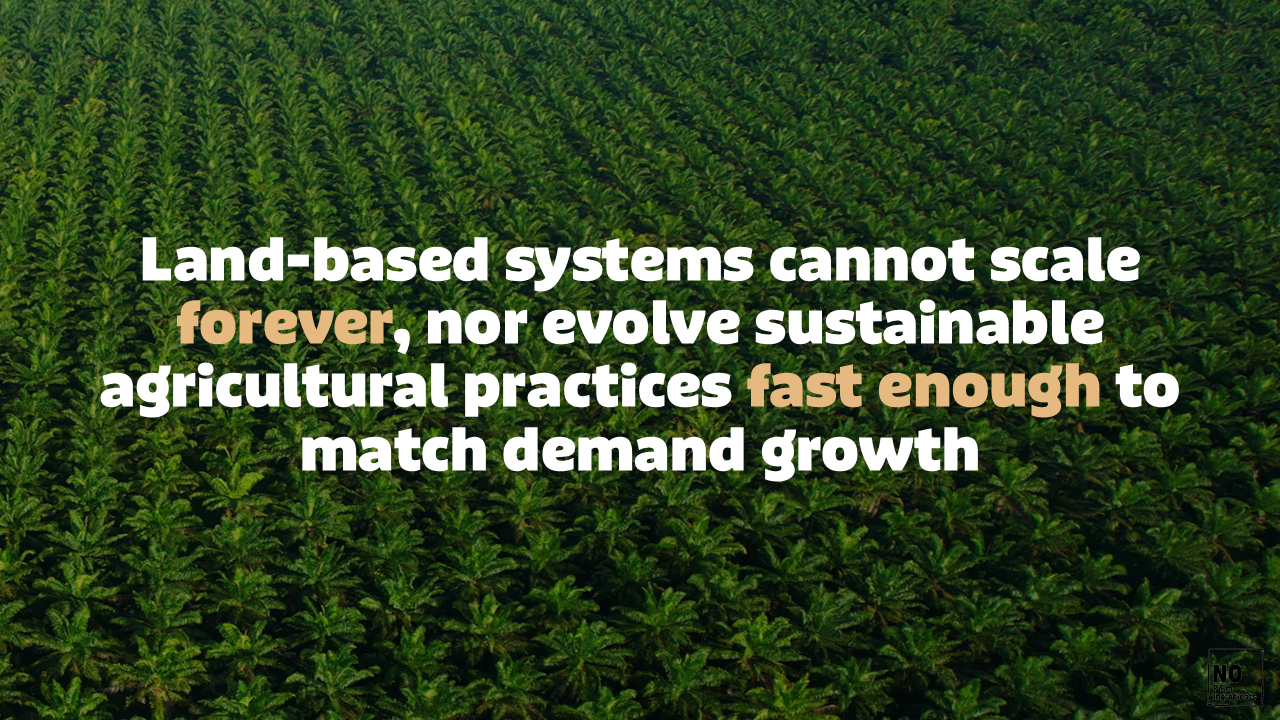
Agricultural expansion has historically been how the world met growing food demand. But that pathway now carries unacceptable costs: deforestation, irreversible biodiversity loss, increased carbon emissions, and ecosystem disruption that undermines the very agricultural systems we depend on. Even if we were willing to accept those costs, the available land is finite and increasingly contested.
The world does not need a replacement for palm. It needs something more important: an additional, land-independent production pathway for oils and fats that can complement agriculture and absorb the growth that farming systems cannot sustainably deliver.
This is a system-level problem that requires a system-level solution.
What we are building
NoPalm Ingredients was founded on a straightforward premise: produce oils through fermentation instead of crops, and decouple fats and oils supply from land constraints entirely.
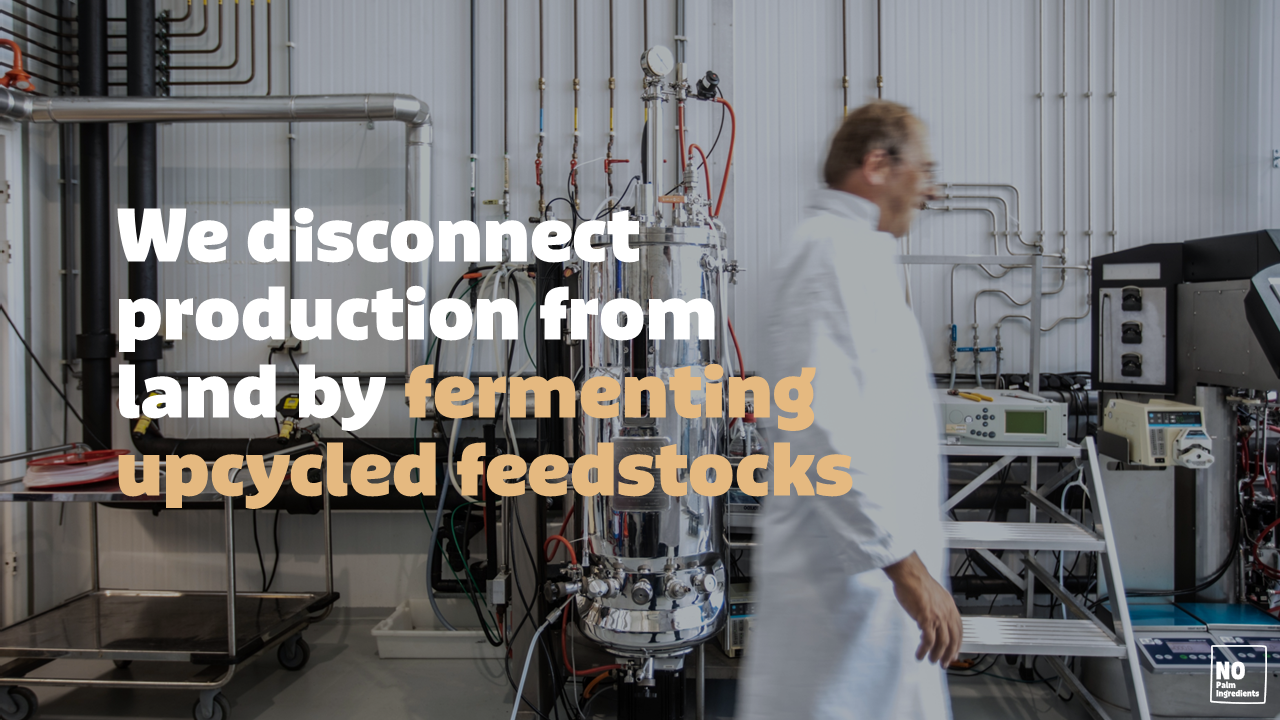
Our process grows oleaginous yeast in industrial fermentation tanks, fed on food industry side streams, materials that would otherwise be low-value waste. The yeast converts those side streams into lipids that replicate the composition and functionality of tropical fats like palm oil, shea butter, or cocoa butter. The products are non-GMO, functionally equivalent, and designed as drop-in replacements that require no reformulation from manufacturers.
The environmental performance is significant: a 90% reduction in carbon emissions and 99% less land use compared to conventional palm oil.
The Food Planet Prize jury described this as "an elegant, systems-aware solution that could quietly decarbonize supply chains and reduce pressure on ecosystems vulnerable to climate extremes." We think it captures something important: the most durable solutions are often the ones that work with existing systems rather than against them.
Our systemic impact
This is not a niche ingredient play. Because palm oil underpins more than 50% of packaged consumer goods, any solution operating in this space operates at system scale, or it does not matter.
Our ambition is precisely that: a new industrial pathway for global fats and oils production. The implications extend well beyond carbon accounting.
Food security. A land-independent production pathway diversifies where and how the world produces essential fats, reducing the vulnerability of food systems to climate shocks, droughts, and ecosystem disruption concentrated in tropical regions.
Price stability. Land-independent production is inherently less exposed to harvest volatility and geopolitical supply disruptions. As a complementary pathway scales, it reduces the exposure of essential food products to the price swings that hit consumers hardest.
Local value creation. Fermentation can be deployed regionally, close to both feedstock sources and end markets. That means manufacturing jobs, shorter and more resilient supply chains, and reduced dependency on concentrated global commodity flows.
Social progress in palm-producing regions. This may be the most underappreciated dimension. When land-independent pathways absorb growing global demand, palm-producing regions are no longer under relentless pressure to expand acreage into new territory. That creates the conditions for something that is currently very difficult: a real focus on improving sustainability practices and strengthening smallholder livelihoods, rather than perpetual expansion.
The goal is not to eliminate palm. It is to give the system room to improve.
Why this moment matters
Being named a Food Planet Prize finalist is among the most meaningful external validations we have received. Not because of what it means for NoPalm Ingredients but because of what it signals to the market.
The world's leading food systems scientists and environmental experts reviewed more than a thousand initiatives and concluded that fermentation-based, circular oil production is ready. Scientifically. Commercially. Systemically.
That conclusion matters enormously for the manufacturers weighing long-term supply risk. For the investors assessing where durable, defensible value will be created in the food ingredients space. For the policymakers and procurement teams trying to understand where to place their confidence in the transition to sustainable food systems.
We are not asking anyone to accept environmental risk at the cost of commercial performance. We are offering the opposite: a pathway that resolves structural supply risk, reduces regulatory exposure, meets consumer expectations, and contributes to the kind of planetary impact that the world's most credible environmental institutions now recognise as necessary.
Our vision
A future where food system growth is decoupled from land expansion. Where palm-producing regions can focus on improving practices and livelihoods rather than clearing new forest. Where manufacturers have access to a stable, circular, land-independent source of the oils and fats that underpin their products.
The palm oil problem is not a problem with palm. It is a problem with a food system that has run out of room to grow.
We think land-independent fermentation is how it finds room again.
NoPalm Ingredients is a 2026 Food Planet Prize finalist. The grand final takes place in Båstad, Sweden from 1–4 June 2026, with the winner announced on 2 June.